Sunday, February 11, 2018
Thursday, February 8, 2018
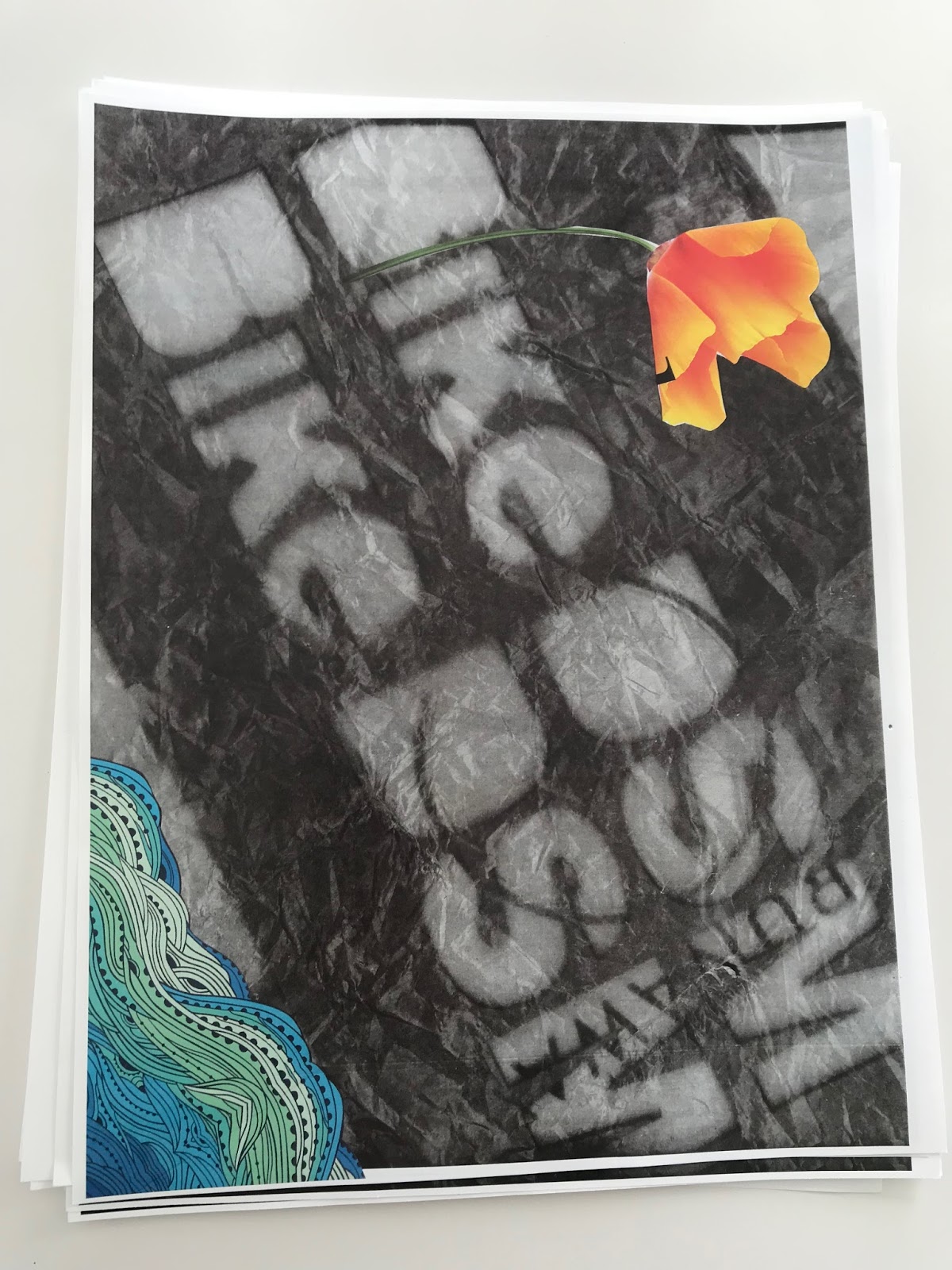
Photo Copy Composition Critique Reflection
I thought it was really interesting to see all of the various compositions that my classmates came up with. It was cool to see how many different results we had even though we all had the same topic. Moving forward after this critique, I would definitely think about experimenting even more. I experimented quite a bit with movement, but I would like to push that even further. I also would think even more about what the copier can do, I never really utilized the zoom feature so it would be interesting to see what results I would get from playing around with that more. I would also want to see maybe what other possible materials I could get in there (part of an actual bike???). Overall, I would want to push my experimentation even further and break out of my comfort zone even more.
Wednesday, February 7, 2018
Design Readings 3
What connections can you make between creativity + failure and serendipity?
I think failure within the creative process many times leads to a serendipitous moment. You could keep trying, and trying, and trying to solve a problem and fail over and over again. From one of those failures, or from something completely unrelated at all, you might find that something pops into your head that perfectly fits your situation.
Do you find any value in discovery on the way to finding an answer? Why?
I think this process, although occasionally frustrating, can certainly be useful. During this discovery period, you may find not only an innovative solution to the problem at hand, but this many times lends itself to discovering an idea for a completely unrelated project.
Steven Johnson outlines contrary arguments about the serendipitous capacity of the internet compared to that of analog media. Based on your own use of digital and print media, which to you find more serendipitous? Why?
I typically find digital media to be more serendipitous, for a few reasons. I definitely work digitally more than I do print, so there is more probability for serendipity to occur. Also, I find myself much more interested in playing around and experimenting with digital media...for me this medium lends itself more to exploration. Through that exploration, and opening yourself up to new ideas, is the perfect place for serendipity to occur.
Monday, February 5, 2018
Design Readings 2
What parallels do you draw between what Michael Beirut and Liz Danzico posit about designing?
Both readings emphasize moving past boundaries in your thinking and finding a way to look at design in a way in which it connects more the everything going on in the world around you.
What is one sentence that is most meaningful to you between these readings? Why? (record both on your blog)
From Danzico's essay, I really connected with the quote, "As you become comfortable in this open field—no matter the discipline—what is common is that you design for people." I think I connected with this because this is what I love about design. I love crafting something that tells a story and really connects with other people.
Thursday, February 1, 2018
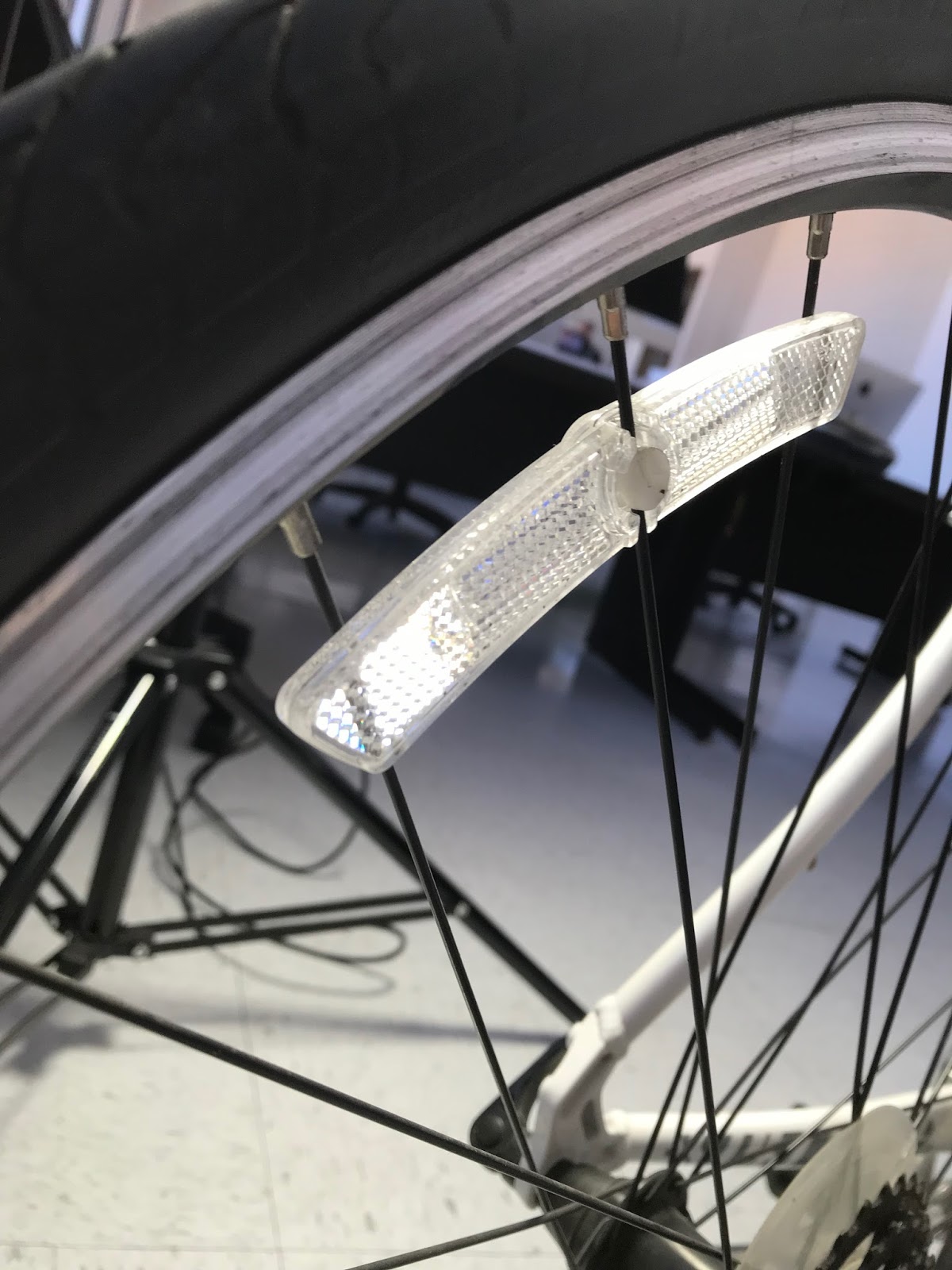
Bike Experimentation Reflection
This hour and a half of experimenting was definitely very interesting. Before we got started I was already frustrated. Having to think abstractly is difficult for me, so I knew this would be a challenge. I began by thinking about the movement of the bike and associating words with bicycling - speed, outside, freedom, road, breeze, sun, sky, trees, grass, work, sweat, connection, determination, carefree. The idea of connection really stuck with me, and as I explored I found more ways that "connection" is essential to biking.
When I first wrote that word, I thought about how people may feel connected to nature when on a bike. However, while exploring different visuals related to biking I began to notice that "connection" seemed to pop up everywhere I looked. Bikes function entirely off of connection. The gears and chains and breaks and wheels are all connected in an intricate system and all are essential for the bike to function. I then noticed that human connection is also essential in bicycling. I bicycle cannot move without a human. Bicycles are built entirely to fit to the human body. And then from there I noticed that bicycling also tends to create a community of people who then form connections through bicycling.
The actual experimentation process started slow, I began with sketches, moved to photography and then later got more playful with videos and playing around with other forms, materials, and connecting with my classmates. At the end I felt MUCH better than when I began. I still need about 10 more non-photographic compositions, but I am feeling much more open to this than earlier today. That's a great feeling.
When I first wrote that word, I thought about how people may feel connected to nature when on a bike. However, while exploring different visuals related to biking I began to notice that "connection" seemed to pop up everywhere I looked. Bikes function entirely off of connection. The gears and chains and breaks and wheels are all connected in an intricate system and all are essential for the bike to function. I then noticed that human connection is also essential in bicycling. I bicycle cannot move without a human. Bicycles are built entirely to fit to the human body. And then from there I noticed that bicycling also tends to create a community of people who then form connections through bicycling.
The actual experimentation process started slow, I began with sketches, moved to photography and then later got more playful with videos and playing around with other forms, materials, and connecting with my classmates. At the end I felt MUCH better than when I began. I still need about 10 more non-photographic compositions, but I am feeling much more open to this than earlier today. That's a great feeling.
Wednesday, January 31, 2018
Readings & Questions 1
In your own words compare/contrast the major points between the Jung and Sasaki essays
Sasaki's essay was all about a creative process founded on research, while Jung's is a creative process founded on intuition.
Think about your own process, which methods do you tend to use and why?
While reading the essays, I definitely connected more with Sasaki's method of creative development.
Sasaki stated that “critical thinking applied to design” involves a 3-step process of research, analysis, and synthesis. This type of thinking makes a lot of sense to me. With my background in Advertising, I have a lot of experience of looking at say a client's needs, coming up with a strategy for meeting those needs/ solving those problems, and then determining the most effective ways to execute that strategy.
At one point, Sasaki mentioned Experimental Research. I tend to shy away from experimental research when it comes to physical materials, at least. I love playing experimenting digitally and figuring out different ways to manipulate graphics. However, I am not great at thinking in a 3-D space and so I tend to shy away from any sort of exploration in that sense.
Later, Sasaki said, “It is necessary to make as many analyses as there are types of relationships.” Again, this really resonates with me. When creating a campaign, if research shows the campaign needs to be targeting several different audiences, it is important to craft individual strategies and executions to best appeal to each of the unique audiences.
Jung's essay was a bit to philosophical for me, and I didn't really connect with his creative process. To a certain extent, intuition comes into play whenever excecuting something creative. However, I feel it’s sort-of dangerous to rely on intuition alone. Graphic Design is all about using visuals to convey a message or idea and it is important to make sure you can justify as to why your creative choices best serve to communicate this message, aside from just “oh, I felt like this would be a good choice.”
How does this relate/connect to the theme of creativity in the John Cleese video?
John Cleese talked a lot about how creativity isn't just some magical thing, it is rather a way of thinking and being. You open yourself up to ideas (I'd lump this in with the research step) and then you close yourself off (once you, say, find a strategy) and begin implementing things sticking to this strategy. You then open yourself up again to be critical of your choices and move forward from there.
DID YOU KNOW HE'S NEARLY HEADLESS NICK IN HARRY POTTER?!?!?! He also founded Monty Python.
How do you define creativity?
I define creativity as an innovative way of approaching, thinking about, and solving problems - both visual and otherwise.
Of the many steps to spark creativity, which do you identify with (explain why or why not) and which one do you plan on including into your process this semester. Explain how that addition will strengthen your process.
I thought Cleese's suggestion of using playfulness or humor to open oneself up to creativity was very interesting. I would love to try and open myself up to being more playful and using humor when developing ideas. This will strengthen my process as it will only lead to more possibilities and ideas, even if it helps get the "bad" ideas out more quickly, one of those "bad" ideas could help lead to a good one!
Subscribe to:
Posts (Atom)